
Shrinath Automobiles Shop: An Application for Inventory Management System
DOI:
https://doi.org/10.26438/ijcse/v13i2.7177Keywords:
An application for inventory management, track stock, collect real-time data, and automate with cloud computing, supply chain management, order fulfillment, data analytics, user-friendly interface, operational efficiencyAbstract
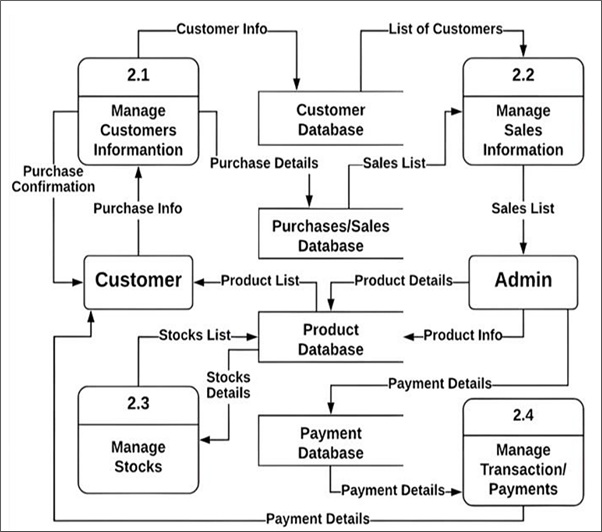
The main focus of this project is the creation of an Inventory Management System (IMS), conceived to improve the inventory management of businesses of all sizes. It includes key features such as stock level tracking in real-time, automatic reorder notification generation, and detailed reporting tools. The IMS, with a friendly interface, allows users to efficiently manage inventories at multiple locations and streamline order processing. The technologies utilized for ensuring data entry accuracy and enhancing accessibility are barcode scanning and cloud computing. This project demonstrates IMS's capabilities to change inventory management practices by offering savings and reducing turnaround time, which improves customer satisfaction, as elaborated in the paper. The author ends with views on the implementation and future improvement for scalability and integration with other business systems. This paper presents a system design and implementation aimed at enhancing the efficiency of inventory tracking, sales management, and financial transactions. The system encompasses customer information management, real-time stock updates, sales tracking, and payment management. It provides a seamless experience to customers and administrators alike. The system minimizes errors and ensures accurate data flow and decision-making based on detailed reports and automated alerts with an interlinked database for customer, product, sales, and payment information system. The expected benefits include increased operational efficiency, improved inventory management, streamlined transaction processes, thus improving customer satisfaction and effective use of business resources.
References
[1] Zoho Corporation, “Cloud Software Suite and SaaS Applications,” Proceedings of the International Conference on Cloud Computing and SaaS Technologies, Vol.12, No.3, pp.45-56, 2021.
[2] Cin7 Limited, “Innovations in Inventory Management Systems,” Journal of Inventory and Supply Chain Management, Vol.18, No.2, pp.112-125, 2020.
[3] Fishbowl, “Advancements in Inventory Software for Business Optimization,” International Journal of Business and Inventory Systems, Vol.15, No.4, pp.78-91, 2019.
[4] Katana, “ERP Solutions for Manufacturing and Inventory Control,” Journal of Enterprise Resource Planning and Automation, Vol.10, No.1, pp.30-42, 2022.
[5] Monday.com, “Project and Workflow Management Using AI-Based Work OS,” Proceedings of the Global Conference on Project Management and Workflow Optimization, pp.256-268, 2021.
[6] Square, “Digital Payment Solutions and Business Growth,” International Journal of Financial Technology and Business Solutions, Vol.20, No.3, pp.101-114, 2023.
[7] Megaventory, “Cloud-Based Inventory Management: Trends and Challenges,” Journal of Cloud Computing and Digital Logistics, Vol.9, No.2, pp.60-75, 2020.
[8] Sortly, “Automated Inventory Tracking and Management,” International Journal of Inventory Control and Automation, Vol.14, No.1, pp.88-99, 2019.
Downloads
Published
How to Cite
Issue
Section
License

This work is licensed under a Creative Commons Attribution 4.0 International License.
Authors contributing to this journal agree to publish their articles under the Creative Commons Attribution 4.0 International License, allowing third parties to share their work (copy, distribute, transmit) and to adapt it, under the condition that the authors are given credit and that in the event of reuse or distribution, the terms of this license are made clear.



