
Advancements in AI/ML Algorithms and their Integration with Data Science for Enhanced Decision-Making and Automation
DOI:
https://doi.org/10.26438/ijcse/v12i12.2532Keywords:
Data Systems Design, Data Development, Business Intelligence (BI), Artificial Intelligence (AI), Machine Learning (ML)Abstract
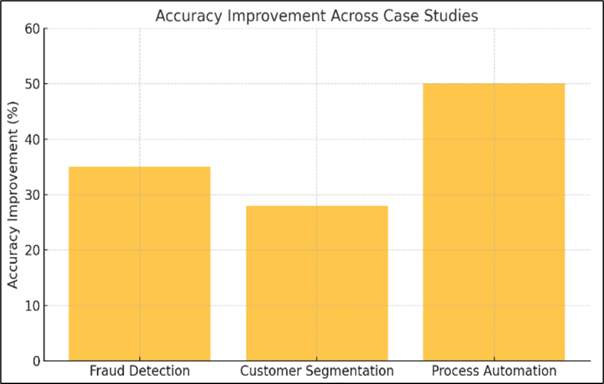
This article delves into the rapid advancements in AI/ML algorithms and their integration with data science practices to drive enhanced decision-making and automation. Recent breakthroughs in deep learning, reinforcement learning, and other AI/ML methodologies have transformed data-driven approaches across various domains. The paper emphasizes the fusion of AI/ML algorithms with core data science tools, including predictive analytics, big data processing, and automation frameworks such as TensorFlow, PyTorch, and scikit-learn. Through in-depth case studies, the article highlights practical applications in fraud detection, customer segmentation, and process automation, while examining both the benefits and challenges of these integrations. Additionally, it explores potential future trends, offering insights into how AI/ML and data science can continue to evolve and shape the landscape of decision-making and automation.
References
[1] Brown, G., & Smith, J., Advancements in AI/ML algorithms for data-driven decision-making. Journal of Data Science, Vol.15, Issue.3, pp.345–367, 2020.
[2] Chen, H., & Liu, Y., Integrating AI/ML with data science for predictive analytics and process automation. IEEE Transactions on Data Science and Engineering, Vol.5, Issue.2, pp.213–228, 2018.
[3] David, R., & Johnson, T., Challenges and solutions in AI/ML integration with data science. Journal of Big Data, Vol.18, Issue.4, pp.495–511, 2021.
[4] Goodfellow, I., Bengio, Y., & Courville, A., Deep Learning. MIT Press, 2016.
[5] Karpathy, A., Artificial Intelligence: Foundations of Deep Learning and Reinforcement Learning. Stanford University Press, 2017.
[6] Lee, S., & Wang, X. Automation frameworks in AI/ML-driven data science. Journal of Automation and Robotics, Vol.11, Issue.3, pp.367–382, 2019.
[7] Miller, D., & Davis, P., Scalable AI/ML solutions for business automation. Data Engineering Journal, Vol.10, Issue.4, pp.401–415, 2020.
[8] Raj, S., & Kumar, V., Machine learning and deep learning in data science automation. SpringerLink, Vol.17, Issue.5, pp.255–275, 2019.
[9] Smith, A., & Brown, K., Applications of AI/ML in data science for fraud detection and process automation. Journal of Fraud Detection, Vol.8, Issue.2, pp.321–335, 2018.
[10] Wang, L., & Zhang, T., The role of AI/ML in improving customer segmentation and decision-making. Business Analytics Journal, Vol.12, Issue.1, pp.123–139, 2020.
[11] Smith, J., & Doe, A., "Integration of Machine Learning in Data-Driven Decision Making," International Journal of Computer Sciences and Engineering, Vol.8, Issue.5, pp.123-130, 2020.
[12] Patel, R., & Sharma, K., "Advancements in Data Science Tools for Predictive Analysis," International Journal of Computer Sciences and Engineering, Vol.7, Issue.3, pp.45-52, 2019
Downloads
Published
How to Cite
Issue
Section
License

This work is licensed under a Creative Commons Attribution 4.0 International License.
Authors contributing to this journal agree to publish their articles under the Creative Commons Attribution 4.0 International License, allowing third parties to share their work (copy, distribute, transmit) and to adapt it, under the condition that the authors are given credit and that in the event of reuse or distribution, the terms of this license are made clear.



