
A Comparative Study of CNN Models Built with TensorFlow and Theano for Forest Fire Detection
DOI:
https://doi.org/10.26438/ijcse/v12i9.18Keywords:
CNN, Deep Learning, VGG16, Forest Fires, Keras, TensorFlow, Theano, Image classificationAbstract
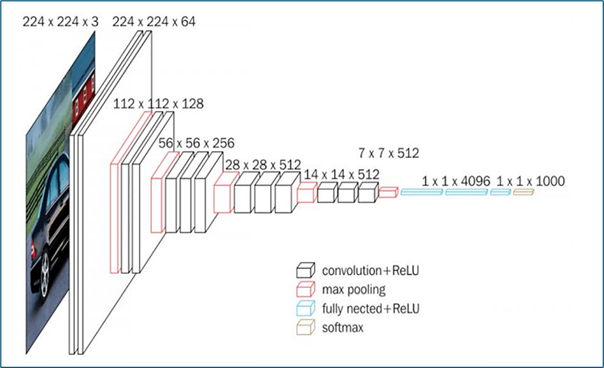
Over the past decade, forest fires have caused devastation in many areas of India, severely harming forest ecosystems, reducing biodiversity, and affecting the lives of populations that depend on the forests for their subsistence. Convolutional Neural Networks (CNNs), or ConvNets, represent a specialized deep learning architecture that extracts and learns patterns directly from data. CNNs are excellent at recognizing patterns in images, allowing them to identify objects, group similar items, and classify different categories with high precision. They can also be highly effective at classifying audio, time-series, and signal data. This work suggests creating a model that can be used to classify whether or not there is forest fire based on the images. In order to get better outcomes, the deep neural network component of the final model was developed from the VGG16 basic architecture. 5062 photos from open source sources, including both fire and no-fire conditions, were used to train the model. This paper presents a model developed using Keras with TensorFlow and Theano as the backend and the efficiency of the model was compared. The TensorFlow based model provided an accuracy of 97.6% and the Theano based model provided an accuracy of 97.54%. Even with limited resolution, the model with Keras and TensorFlow backend was able to categorise the majority of the random pictures given to it as Fire(1) and No Fire(0) class with better evaluation scores and less time.
References
[1] M. Aamir et al., “Natural Disasters Intensity Analysis and Classification Based on Multispectral Images Using Multi-Layered Deep Convolutional Neural Network,” Sensors, Vol.21, No.8, pp.2648, 2021.
[2] F. Guede-Fernández, L. Martins, R. V. de Almeida, H. Gamboa, and P. Vieira, “A Deep Learning Based Object Identification System for Forest Fire Detection,” Fire, Vol.4, No.4, pp.75, 2021.
[3] R. Xu, H. Lin, K. Lu, L. Cao, and Y. Liu, “A Forest Fire Detection System Based on Ensemble Learning,” Forests, Vol.12, No.2, pp.217, 2021.
[4] D. Kinaneva, G. Hristov, J. Raychev, and P. Zahariev, "Early Forest Fire Detection Using Drones and Artificial Intelligence," 2019 42nd International Convention on Information and Communication Technology, Electronics and Microelectronics (MIPRO), pp.1060-1065, 2019.
[5] Abdelmalek Bouguettaya, Hafed Zarzour, Amine Mohammed Taberkit, Ahmed Kechida, “A review on early wildfire detection from unmanned aerial vehicles using deep learning-based computer vision algorithms,” Signal Processing, Vol.190, pp.108309, 2022.
[6] Zhang, G., Wang, M., & Liu, K., “Forest Fire Susceptibility Modeling Using a Convolutional Neural Network for Yunnan Province of China,” Int J Disaster Risk Sci, Vol.10, pp.386–403, 2019.
[7] Abid, F., “A Survey of Machine Learning Algorithms Based Forest Fires Prediction and Detection Systems,” Fire Technol, Vol. 57, pp.559–590, 2021.
[8] M. Zainab, A. R. Usmani, S. Mehrban, and M. Hussain, "FPGA based implementations of RNN and CNN: a brief analysis," In 2019 International Conference on Innovative Computing (ICIC), pp.1-8, 2019.
[9] Alzubaidi, L., Zhang, J., Humaidi, A. J., et al., “Review of deep learning: concepts, CNN architectures, challenges, applications, future directions,” J Big Data, Vol.8, pp.53, 2021.
[10] Bogacz, M., and A. Qouneh, "Convolution Neural Network on BeagleBone Black Wireless for Machine Learning Applications," 2022 IEEE MIT Undergraduate Research Technology Conference (URTC), Cambridge, MA, USA, pp.1-4, 2022.
[11] Shorten, C., and T. M. Khoshgoftaar, "A survey on image data augmentation for deep learning," Journal of Big Data, Vol.6, No.1, pp.1-48, 2019.
[12] N. T. Toan, P. Thanh Cong, N. Q. Viet Hung, and J. Jo, "A deep learning approach for early wildfire detection from hyperspectral satellite images," 2019 7th International Conference on Robot Intelligence Technology and Applications (RiTA), pp.38-45, 2019.
[13] D. Rashkovetsky, F. Mauracher, M. Langer, and M. Schmitt, "Wildfire Detection From Multisensor Satellite Imagery Using Deep Semantic Segmentation," IEEE Journal of Selected Topics in Applied Earth Observations and Remote Sensing, Vol.14, pp.7001-7016, 2021.
[14] M. Park, D. Q. Tran, D. Jung, and S. Park, “Wildfire-Detection Method Using DenseNet and CycleGAN Data Augmentation-Based Remote Camera Imagery,” Remote Sensing, Vol.12, No.22, pp.3715, 2020.
[15] K. Govil, M. L. Welch, J. T. Ball, and C. R. Pennypacker, “Preliminary Results from a Wildfire Detection System Using Deep Learning on Remote Camera Images,” Remote Sensing, Vol.12, No.1, pp.166, 2020.
[16] Shruthi G, Disha Bhat, Gagana H, Dimple M K, Kavitha, "Forest Fire Detection Using Convolutional Neural Networks", International Journal of Computer Sciences and Engineering, Vol.7, Special Issue.14, pp.323-325, 2019.
Downloads
Published
How to Cite
Issue
Section
License

This work is licensed under a Creative Commons Attribution 4.0 International License.
Authors contributing to this journal agree to publish their articles under the Creative Commons Attribution 4.0 International License, allowing third parties to share their work (copy, distribute, transmit) and to adapt it, under the condition that the authors are given credit and that in the event of reuse or distribution, the terms of this license are made clear.



