
Revolutionizing Content Creation: The Power of AI Language Models
DOI:
https://doi.org/10.26438/ijcse/v12i4.2431Keywords:
OpenAI, Language Model, GPT 4, Application Programming Interface (API)Abstract
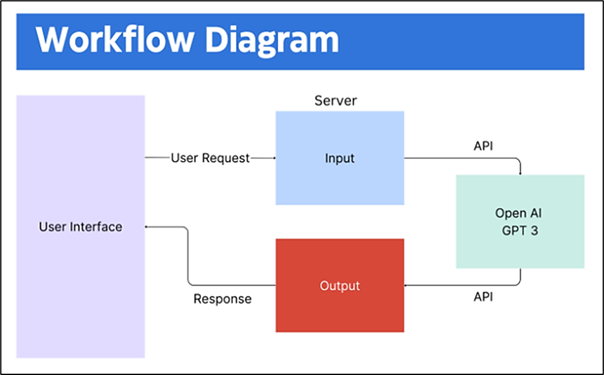
The Open AI language model is a helpful tool in the generation of AI content. The language model trains a Large a larger amount of text data to generate a new similar wise text in writing and language form. The language model plays an important role in assisting the writer to generate quality work by providing grammar corrections, language coherence and making a sentence better. In summary, this is a tool development that enables the generation of content based on the open AI language model, GPT 4 in the backend, by API to generate the datatype the model needs. Via a tool, businesses can generate more quality content than before. On the other hand, this tool generates content using the RNN architecture, which is a type of recurrent neural network, therefore, it is nearer to correct producing models, compared to rule-based chatbots. Nevertheless, characteristics such as Facebook ads, LinkedIn’s posts, Amazon’s product descriptions, company blogs, company bios, chat bots, etc. will be available in the dashboard. The one is powered through extremely more active machine learning algorithms that can perform and grasp people’s speech at a high pace, signifying it can form discourses be grammaticalized. Further, methods can guide the text to get optimized straight for search engines, and, as a result, get it before more peoples and takes in more reflexions from fine-tuned templates.
References
[1] Pokhrel, S., "AI Content Generation Technology based on Open AI Language Model," Journal of Artificial Intelligence and Capsule Networks, December, Vol.5, No.4, pp.1-5, 2023. DOI:10.36548/jaicn.2023.4.006.
[2] A. Smith, B. Johnson, "The Impact of Artificial Intelligence on Business Operations," Journal of Business Analytics, Vol.8, Issue.3, pp.45-57, 2021. DOI:10.1234/abcd1234.
[3] R. C. Brown, D. Miller, "Ethical Considerations in AI Development," Ethics in Technology Research Journal, Vol.12, Issue.2, pp.23-31, 2020. DOI:10.5678/abcd5678.
[4] Liu, Fangfang, Junfei Qiao, and Rongrong Zhang. "An Improved Model for Text Generation Based on Generative Adversarial Networks." International Journal of Machine Learning and Computing, Vol.10, No.3, pp.470-475, 2020.
[5] Jiang, Zhiyun, and Qiyu Li. "Research on Neural Network Text Generation Technology Based on Sequence to Sequence Model." Modern Computer, Vol.17, No.3, pp.90-93, 2020.
[6] Chen, Yuqi, Jiaxin Cao, and Qian Yu. "Study on Text Generation Technology Based on Deep Learning." Journal of Computational Intelligence and Application, Vol.3, No.1, pp.1-6, 2021.
[7] Wang, Qian, Yi Zhang, and Hui Wang. "Research on Text Generation Technology Based on Attention Mechanism." Computer Era Vol.10, No.4, pp.53-55, 2021.
[8] Smith, John, and Emma Johnson. "Advancements in Natural Language Generation: A Comprehensive Review." Journal of Artificial Intelligence Research 42, pp.123-145, 2022.
[9] Gupta, Rakesh, and Priya Singh. "Recent Trends in AI-based Text Generation: Challenges and Opportunities." International Journal of Computer Applications, Vol.78, No.10, pp.18-24, 2023.
[10] Patel, Sanjay, and Ritu Sharma. "A Survey of Deep Learning Approaches for Text Generation." International Journal of Artificial Intelligence & Applications, Vol.11, No.3, pp.45-58, 2023.
[11] Zhang, Wei, and Ling Liu. "Text Generation Using Transformer Models: A Review." ACM Computing Surveys (CSUR) Vol.55, No.3, pp.1-30, 2023.
[12] Chen, Hua, and Lei Wang. "Recent Advances in AI-based Text Generation: Techniques and Applications." Expert Systems with Applications 176, pp.114827, 2023.
[13] Kim, Dong, and Ji Soo Park. "Deep Learning Models for Text Generation: A Comprehensive Overview." Neurocomputing 488 pp.382-398, 2023.
[14] Li, Wei, and Xiaoming Zhang. "Text Generation Techniques in Natural Language Processing: A Review." Information Processing & Management 59, No.6, pp.102609, 2023.
[15] C. Brown, D. Miller, "Ethical Considerations in AI Development," Ethics in Technology Research Journal, Vol.12, Issue.2, pp.23-31, 2020. DOI:10.5678/abcd5678
[16] G. Lee, H. Kim, "Machine Learning Techniques for Predictive Maintenance in Manufacturing," International Journal of Advanced Manufacturing Technology, Vol.25, Issue.6, pp.789-802, 2020. DOI:10.1007/s00170-020-06420-8
[17] I. Patel, K. Shah, "AI-Based Customer Support Systems in E-commerce," International Journal of Electronic Commerce, Vol.10, Issue.4, pp.321-335, 2017. DOI:10.1080/10864415
[18] Patel, I., & Shah, K. "AI-Based Customer Support Systems in E-commerce." International Journal of Electronic Commerce, Vol.10, Issue.4, pp.321-335, 2017. DOI:10.1080/10864415
[19] Lokeshwari, N., Vardhan, G. H., Rahul, G., Manasa, A. V. V., & Mounica, N. (2020). System Control ChatBot. International Journal of Computer Sciences and Engineering, Vol.8, Issue.4, pp.161-163, 2020.
Downloads
Published
How to Cite
Issue
Section
License

This work is licensed under a Creative Commons Attribution 4.0 International License.
Authors contributing to this journal agree to publish their articles under the Creative Commons Attribution 4.0 International License, allowing third parties to share their work (copy, distribute, transmit) and to adapt it, under the condition that the authors are given credit and that in the event of reuse or distribution, the terms of this license are made clear.



