
Implementation of Virtual Mouse Using Pupil Detection for Physically Disabled
DOI:
https://doi.org/10.26438/ijcse/v11i4.3945Keywords:
Pupil control system,, Pupil tracking systems, Mouse cursor, Webcam, Eye movement, Virtual mouseAbstract
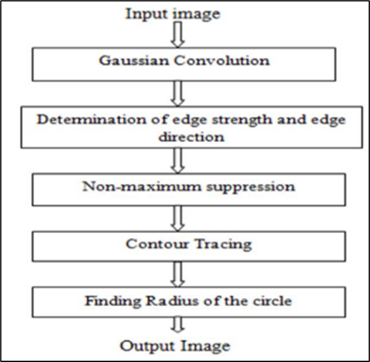
Current technology often uses the computer mouse or finger to move the cursor along the screen. A mouse or finger movement is detected by the system and mapped to the cursor movement. HCI (Human-Computer Interface) involves the use of computer technology to provide a human-computer interface. Communication between humans and computers needs to be made more effective through appropriate technology. Interaction between humans and computers is crucial. It is therefore important to find a method for enabling individuals with disabilities to communicate with computers and be part of the Information Society in an equal way. In this project, a virtual mouse is built that works based upon the movement of the pupil of an eye, where the detection takes place with the help of a webcam. Here, the system detects the face of the user using facial landmark detectors. Then using the Canny Edge detection algorithm, the pupil of the eye is detected. Then the mouse is calibrated to the pupil. Left click and right click are implemented by detecting left blink and right blink of eye using Eye Aspect Ratio algorithm. The system is expected to be easy to use, take fast input, and work as an alternative to a physical mouse.
References
[1] Hafiz Hamza Ashraf, Syed Muhammad Tahir Saleem, Sammat Fareed, Farzana Bibi, Arsalan Khan, Shahzad Gohar, “IMouse: Eyes Gesture Control System,” International Journal of Advanced Computer Science and Applications, Vol. 9, Issue 9, pp.1-5, 2018.
[2] C. Sun and P. Vallotton, “Fast linear feature detection using multiple directional non maximum suppression,”,”Journal of Microscopy” ,Vol. 234, Issue 2, pp.147-157, 2009.
[3] Kalyani Ijardar,Palak Jaiswal, Mansi Dhakiter, Mayuri Kadke, Tushar Barai “Human eye based computer mouse.”, “International Research Journal of Modernization in Engineering Technology and Science”, Vol. 04, Issue 12, pp.1-5,2022
[4] Aleksei Bukhalov, Viktoriia Chafonova, "An Eye Tracking Algorithm based on Hough transform" IEEE COMPEL 2018, Padova, Italy, pp. 1-2, 2018
[5] Sunil Kumar Beemanapally, Chetan Kumar, Diksha Kumari “Eye Ball Based Cursor Movement”,” International Research Journal of Modernization in Engineering Technology and Science”, Vol. 02, Issue:09 ,2020
[6] Nitasha, Shammi Sharma, Reecha Sharma, " Comparison Between Circular Hough Transform and Modified Canny Edge Detection Algorithm for Circle Detection", International Journal of Engineering Research & Technology (IJERT) Vol. 1 Issue 3, pp. 1-5, May – 2012
[7] Suzuki, M., Yamamoto, N., Yamamoto, O., Nakano, T., Yamamoto, S.: Measurement of driver’s consciousness by image processing - a method for presuming driver’s drowsiness by eye-blinks coping with individual differences. In: IEEE ICSMC. vol. 4, pp. 2891–2896, 2006
[8] Grauman, K., Betke, M., Gips, J., Bradski, G.: Communication via eye blinks - detection and duration analysis in real time. In: Computer Vision and Pattern Recognition. vol. 1, pp. 1010–1017, 2001
[9] A. George and A. Routray, “Fast and accurate algorithm for eye localisation for gaze tracking in low-resolution images,” IET Computer Vision, vol. 10, issue 7, 2016, pp. 660-669.
[10] M. Smereka and I. Duleba, “Circular object detection using a modified Hough transform,” International Journal of Applied Mathematics and Computer Science, vol. 18, no. 1, pp. 85–91, 2008.
[11] P. Yang, B. Du, S. Shan, and W. Gao, “A novel pupil localization method based on gaboreye model and radial symmetry operator,” in Image Processing, 2004. ICIP’04. 2004 International Conference on, vol. 1. IEEE, pp. 67–70, 2004.
[12] Vamsh i Krishna M Mane, Gopu Abhishek Reddy, B. Prashanthi, M. Sreevani “Green Virtual Mouse Using OpenCv”, , International Journal of Computer Sciences and Engineering(IJCSE),Vol.-7, Issue-4, April 2019.
[13] Aruna Kumar B, T.Hashmitha, Swathi S.G, Vineeth P, “Recognizing Mouse Events through Head/Hand Movement”, International Journal of Computer Sciences and Engineering(IJCSE), Vol.-7, Special Issue-14, May 2019.
[14] Robert Gabriel Lupu, Florina Ungureanu, Valentin Siriteanu, "Eye tracking mouse for human computer interaction", 2013 E-Health and Bioengineering Conference (EHB), Iasi, Romania, pp. 1-2, 2014
Downloads
Published
How to Cite
Issue
Section
License

This work is licensed under a Creative Commons Attribution 4.0 International License.
Authors contributing to this journal agree to publish their articles under the Creative Commons Attribution 4.0 International License, allowing third parties to share their work (copy, distribute, transmit) and to adapt it, under the condition that the authors are given credit and that in the event of reuse or distribution, the terms of this license are made clear.



