
Revolutionizing Online Education: Integrating Machine Learning and Data Analysis into LMS
DOI:
https://doi.org/10.26438/ijcse/v11i3.2833Keywords:
analysis of data, artificial intelligence, machine learning, online educationAbstract
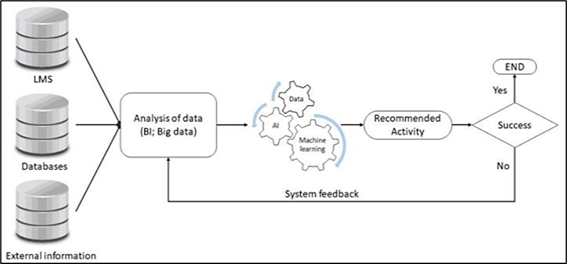
In 2020, the events that transpired revealed the fragility of society and its vulnerability to abrupt shifts in governing paradigms. The outbreak of COVID-19 pandemic globally altered the manner in which people engage in activities such as communication, work, study, and interaction. This resulted in a significant change in the way society operates, including education. To accommodate the new reality, education embraced the use of technology, specifically information and communication technologies. One such example is the increased reliance on learning management systems as a platform for resource management and educational activities. This proposal seeks to enhance the learning experience by incorporating artificial intelligence and data analysis into learning management systems. The aim is to establish robust educational models in the new normal, where students have access to virtual assistants for guidance during online learning.
References
[1] Li, H., Liu, S.M., Yu, X.H., Tang, S.L. & Tang, C.K. (2020). Coronavirus disease 2019 (COVID-19): Current status and future perspectives. International Journal of Antimicrobial Agents, 55, 105951, 2020. doi: 10.1016/j.ijantimicag.2020.105951
[2] Riofrio, G., Encalada, E., Guaman, D. & Aguilar, J. (2015, October). Business intelligence applied to learning analytics in student-centered learning processes. In Proceedings of the Latin American Computing Conference. Arequipa, Peru. pp.1-10, 2015.
[3] Beldarrain, Y. (2006). Distance education trends: Integrating new technologies to foster student interaction and collaboration. Distance Education, 27, 139-153, 2006. doi: 10.1080/01587910600789498
[4] Hssina, B., Bouikhalene, B. & Merbouha, A. (2017). Europe and MENA Cooperation Advances in Information and Communication Technologies (Vol. 520). In A. Rocha, S. Mohammed & C. Felgueiras (Eds.), Springer International Publishing. 2017. doi: 10.1007/978-3-319-46568-5_43
[5] Villegas-Ch, W., Lujan-Mora, S. & Buenano-Fernandez, D. (2017, November). Application of a Data Mining Method in to LMS for the Improvement of Engineering Courses in Networks. In Proceedings of the 10th International Conference of Education, Research and Innovation. Seville, Spain. pp. 6374-6381, 2017.
[6] Comendador, B.E.V., Rabago, L.W. & Tanguilig, B.T. (2016, March). An educational model based on Knowledge Discovery in Databases (KDD) to predict learner’s behavior using classification techniques. In Proceedings of the IEEE International Conference on Signal Processing, Communications and Computing, Shanghai, China. pp. 1-6, 2016.
[7] Kim, T. & Lim, J. (2019). Designing an Efficient Cloud Management Architecture for Sustainable Online Lifelong Education. Sustainability, 11, 1523, 2019. doi: 10.3390/su11061523
[8] Ferguson, R. (2013). Learning analytics: Drivers, developments and challenges. International Journal of Technology Enhanced Learning, 4, 304-317, 2013. doi: 10.1504/IJTEL.2013.057405
[9] Lee, S.J., Lee, H. & Kim, T.T. (2018). A study on the instructor role in dealing with mixed contents: How it affects learner satisfaction and retention in e-learning. Sustainability, 10, 850, 2018. doi: 10.3390/su10030850
[10] Lee, J., Song, H.D. & Hong, A.J. (2019). Exploring factors, and indicators for measuring students’ sustainable engagement in e-learning. Sustainability, 11, 985, 2019. doi: 10.3390/su11040985
[11] Villegas-Ch, W., Palacios-Pacheco, X., Buenaño-Fernandez, D. & Luján-Mora, S. (2019). Comprehensive learning system based on the analysis of data and the recommendation of activities in a distance education environment. International Journal of Engineering Education, 35, 1316-1325, 2019.
[12] Darcy, A.M., Louie, A.K. & Roberts, L.W. (2016). Machine learning and the profession of medicine. JAMA, 315, 2016.
Downloads
Published
How to Cite
Issue
Section
License

This work is licensed under a Creative Commons Attribution 4.0 International License.
Authors contributing to this journal agree to publish their articles under the Creative Commons Attribution 4.0 International License, allowing third parties to share their work (copy, distribute, transmit) and to adapt it, under the condition that the authors are given credit and that in the event of reuse or distribution, the terms of this license are made clear.



